




Sixties
City presents
a wide-ranging series of
articles on all aspects of the Sixties, penned by the creator of the iconic
60s music paper Mersey
Beat
|
|
|
|
|
|
|
Sixties
City presents
a wide-ranging series of
articles on all aspects of the Sixties, penned by the creator of the iconic
60s music paper Mersey
Beat
|
|||||
|
 |
| BH:
This isn't true. On 6th June 1961 I entered NEMS, asked to see the
manager and Brian came down. I showed him my copies of the very first issue
of Mersey Beat and asked if he would take any copies. He did. He then phoned
in the afternoon, amazed that they had sold out so quickly. The next batch
also sold out, so Brian ordered 144 copies of issue No.2. When Brian invited
me into his office to talk, he had been fascinated by Mersey Beat because
he never knew such a music scene existed on his own doorstep. Items in the
first issue included John's story of the formation of The Beatles and the
entire back page was an advert for the Cavern, which was around the corner
from his shop. The full cover of Mersey Beat 2 featured a photo of The Beatles in Hamburg in their black leather and the headline 'Beatles Sign Recording Contract', with the full story of their recording session. This was published on 20th July 1961. Paul McCartney, in his autobiography, states that this is how Brian discovered them. Brian invited me to lunch twice at the Basnett Bar in Basnett Street to ask me for as much information as I could tell him about the amazing scene I was reporting in Mersey Beat. He asked if he could be my record reviewer and I agreed. With issue 3 on August 3rd, 1961 his first record reviews appeared under his own name. And he also took advertising. His advert appeared on the full page with Bob Wooler's famous article about The Beatles, also in August. As The Beatles were the group I promoted most in Mersey Beat, Brian wanted more information from me about them and asked if I could arrange for him to visit the Cavern to see them, which I did. Why didn't he acknowledge this in his book, claiming he had never heard of them until a boy came into his shop on 28th October 1961 to order their record? This was over three months after I'd been discussing them with him. Perhaps it was because of what Philip Norman was to point out in his Beatles book decades later - that Brian didn't like to attribute credit to anyone. Saying the boy came into his shop was a good opening to his book, but it is only relevant if he'd never heard of them before, which he already had. The difference between Brian's story and what really happened is actually proven in black and white in the issues of Mersey Beat months prior to Brian's claim. I recall the quote from 'The Man Who Shot Liberty Valance', in which the newspaper editor says, "When the legend becomes fact, print the legend". |
 |

 |
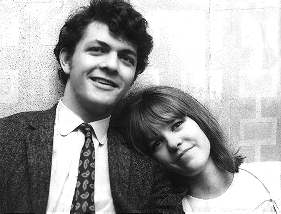
Bill
Harry attended
the Liverpool College of Art with Stuart Sutcliffe and John Lennon and made
the arrangements for Brian Epstein to visit The Cavern, where he saw The
Beatles for the first time. Bill was a member of 'The Dissenters' and the
founder and editor of 'Mersey Beat', the iconic weekly music newspaper
that documented the early Sixties music scene in the Liverpool area and
is possibly best known for being the first periodical to feature a local
band called 'The Beatles'. He has worked as a high powered publicist, doing PR for acts such as Suzi Quatro, Free, The Arrows and Hot Chocolate and has managed press campaigns for record labels such as CBS, EMI, Polydor. Bill is the critically acclaimed author of a large number of books about The Beatles and the 60s era including 'The Beatles Who's Who', 'The Best Years of the Beatles' and the Fab Four's 'Encyclopedia' series. He has appeared on 'Good Morning America' and has received a Gold Award from the British Academy of Songwriters, Composers and Authors. |
|
Article
Text
 Bill Harry Original
Graphics SixtiesCity
Other individual owner
copyrights may apply to Photographic Images UK
web hosting by
 |